Proof-of-concept

Doorstep Pickup

I built a small Laravel and Flutter app to prove that a coffee subscription can feel calmer, clearer, and more personal after the checkout is done.

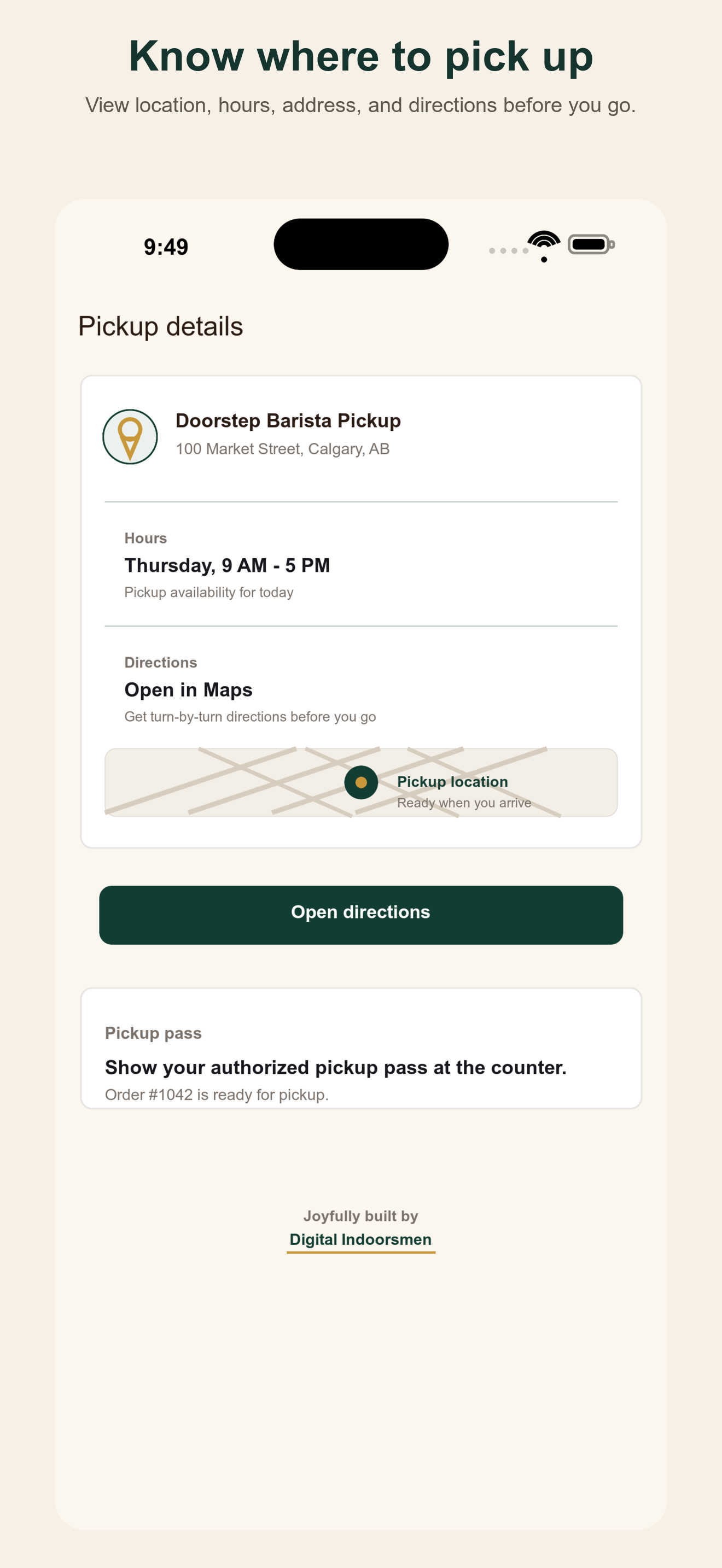
Doorstep Pickup location details screen
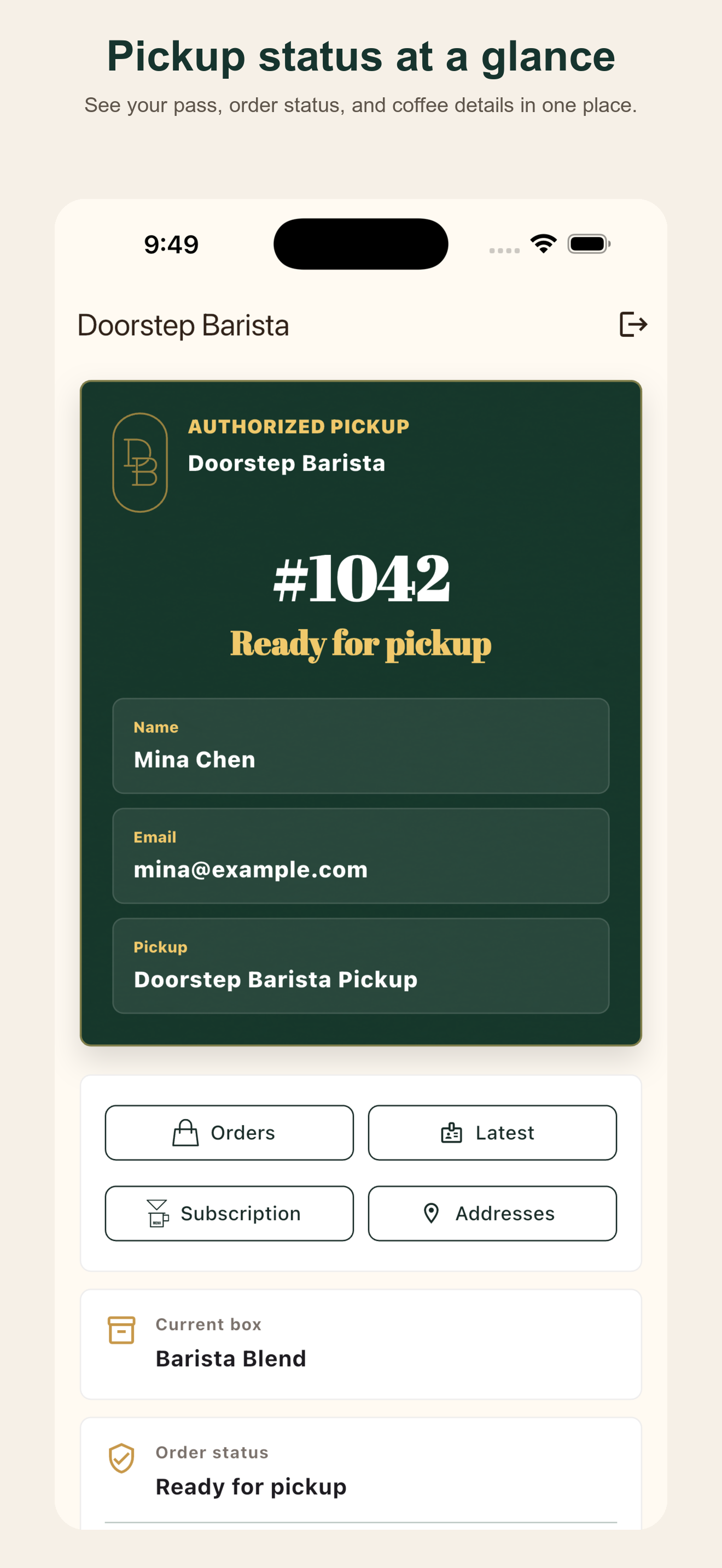
Doorstep Pickup dashboard screen

Why I made it.

This started as a proof-of-concept, not a production pitch. I wanted to explore whether the existing Doorstep Barista customer experience could be extended into something that feels useful in the moment a customer actually needs it.

Doorstep Barista already has the hard parts of the business: good coffee, real customers, subscriptions, orders, pickup rhythms, and a WordPress/WooCommerce store that runs the commerce layer. The opportunity I saw was not to replace that. It was to ask what could sit beside it.

The app is a customer experience layer. It answers a few ordinary but high-value questions: What is my current box? Is my order ready? Where do I pick it up? When does the next subscription renewal happen?

That is why the proof-of-concept is intentionally narrow. A good pickup app does not need to become a giant account portal on day one. It needs to reduce uncertainty, make the next action obvious, and give the brand one more thoughtful touchpoint after someone has already chosen to buy.
Why Laravel and Flutter.

I chose the stack around the shape of the problem: protect the store integration on the server, then give customers a native-feeling mobile surface.

Laravel as the careful middle layer

Laravel is where authentication, WooCommerce data, caching, normalization, and future API decisions belong. It keeps WordPress tokens, cookies, and integration details away from the phone.

Flutter for the customer moment

Flutter let me build the dashboard, pickup details, subscription view, and sign-in flow as one coherent mobile experience while still keeping the door open for iOS and Android.

A proof before a rebuild

The point was not to over-engineer a new platform. The point was to prove that the existing commerce system could support a better pickup and subscription experience with the right adapter.

The beans are the reason this is worth caring about.

I like Doorstep Barista because the coffee choices feel curated instead of random. The app only makes sense if the thing inside the box is already worth looking forward to.

One of my favorite things about Doorstep Barista is that the beans feel chosen by people who actually care. Subscription coffee can become anonymous pretty quickly: a bag shows up, the label changes, and the customer has to do the work of figuring out why it matters.

I wanted the app to leave room for the opposite feeling. A customer should be able to open their phone and see the current box as something with a bit of story and anticipation around it. Not just a fulfillment record. A small ritual.

That is the part of the project I enjoy most: using software to give good physical things a clearer digital home. The beans are already doing the sensory work. The app should simply make the relationship easier to follow.

What the concept includes.

The current proof-of-concept shows the core customer flow: sign in, check pickup readiness, see location details, and understand subscription status without digging through a full storefront account area.

Doorstep Pickup dashboard screen
Pickup status, current box, and quick account actions.
Doorstep Pickup details screen
Pickup location, hours, directions, and pass reminder.
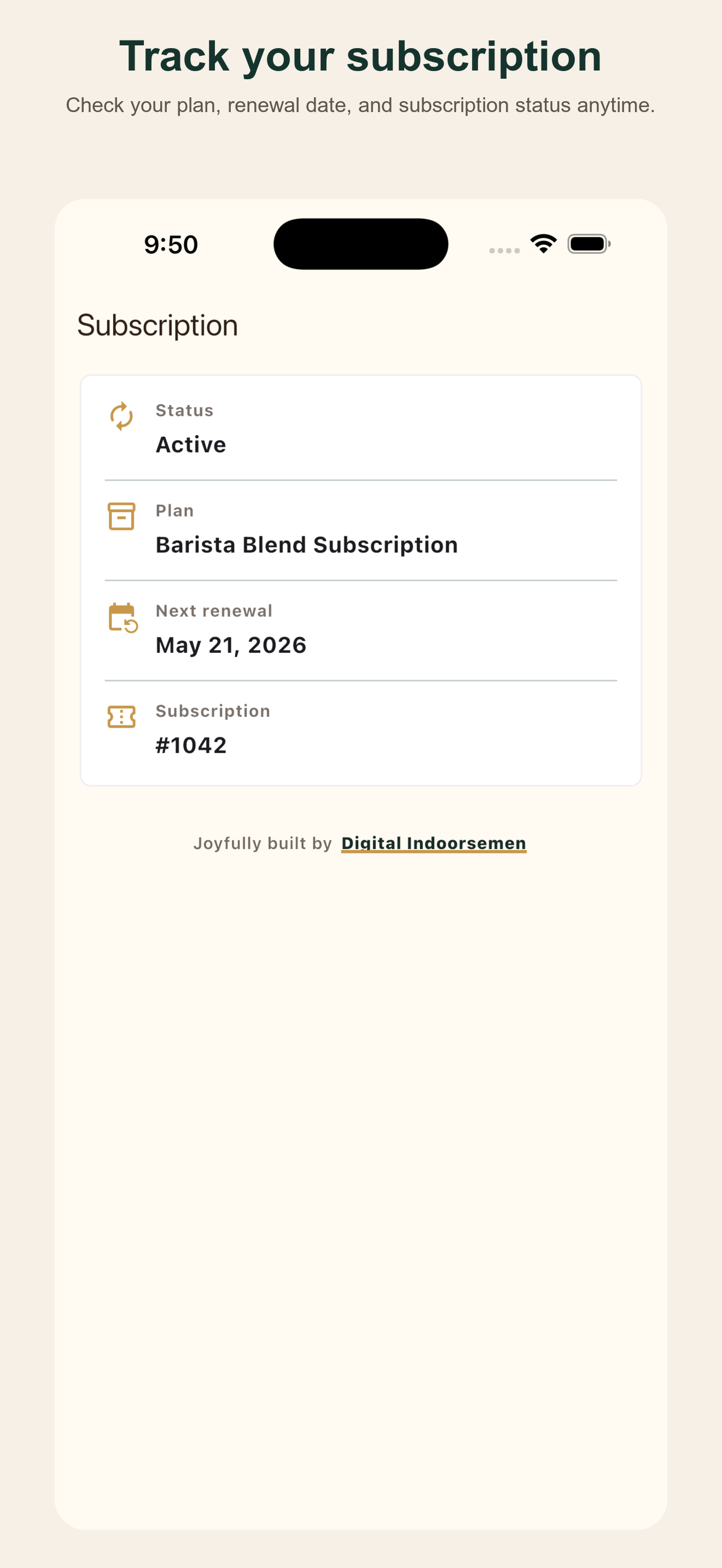
Doorstep subscription screen
Subscription status, next renewal, cadence, and plan notes.
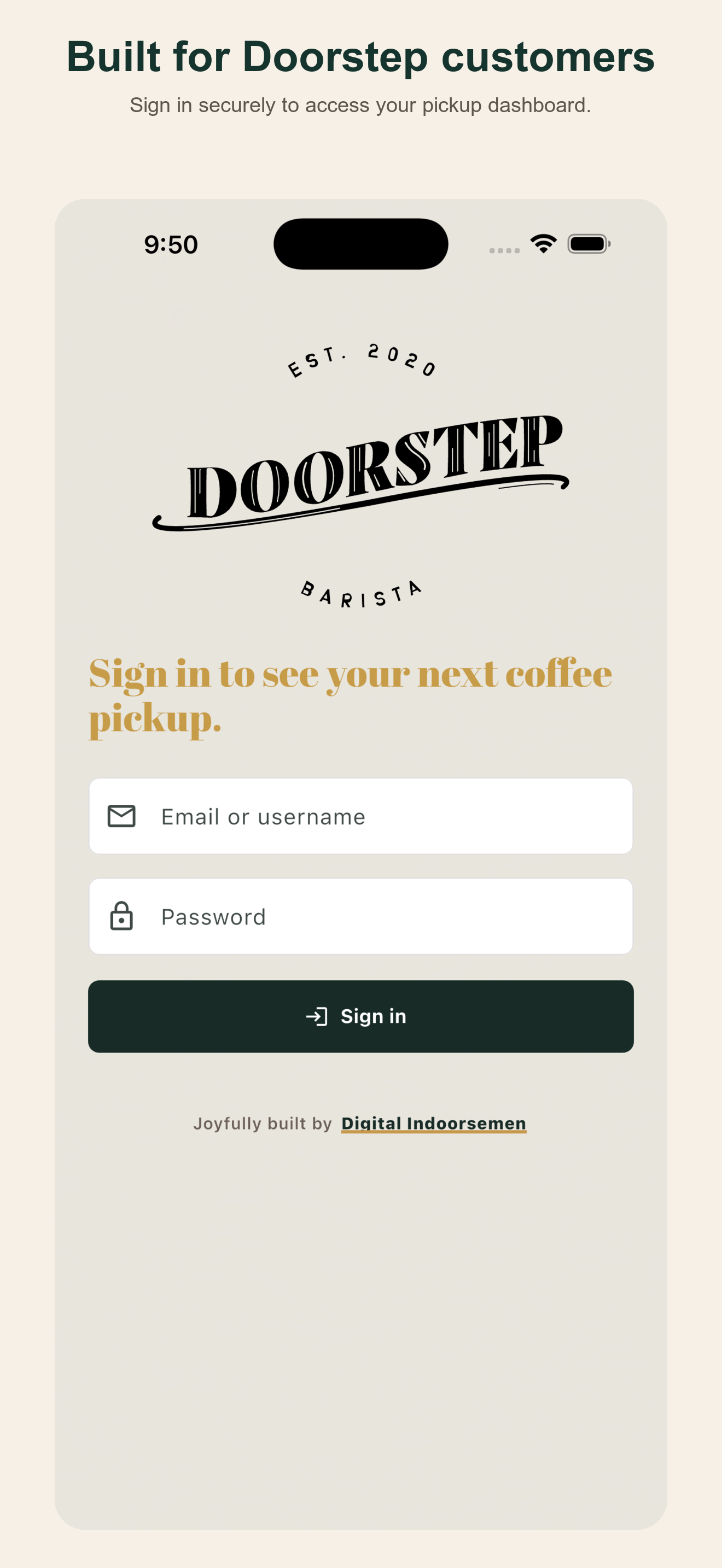
Doorstep Pickup sign in screen
A branded sign-in surface backed by Laravel auth.

What it proves.

The useful thing about a proof-of-concept is not that it pretends everything is solved. It shows which questions are worth answering next.

WooCommerce can remain the source of truth

The Laravel layer can normalize customer data without forcing the business to abandon the store that already works.

The mobile experience can be focused

The app can be about pickup, subscription clarity, and coffee history instead of trying to mirror every storefront feature.

The brand can feel more premium after purchase

The best customer software does not end at checkout. It keeps serving people through the small moments that happen after the order.